Urbanism / neighborhoods · Historical foundations
Jane Jacobs
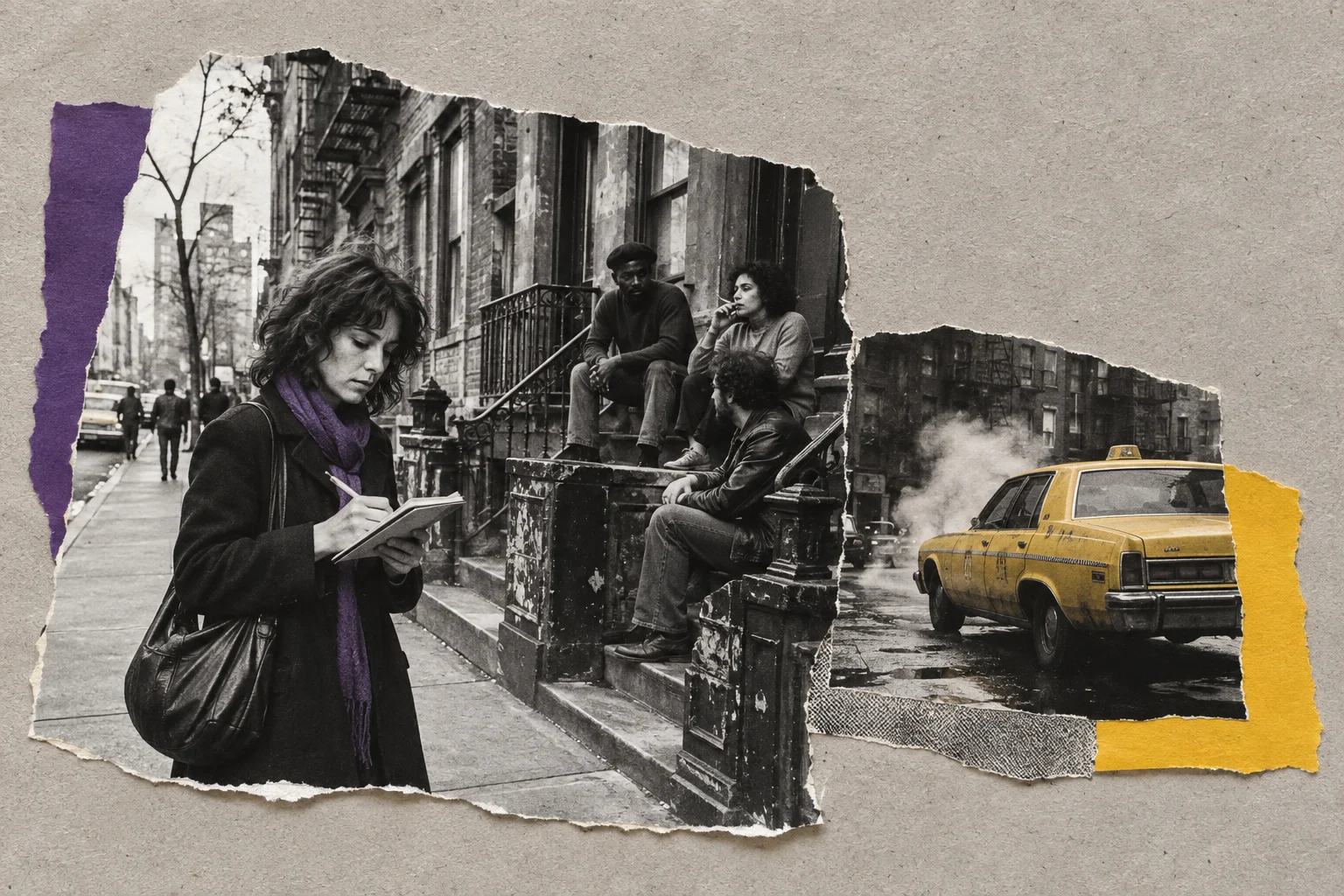
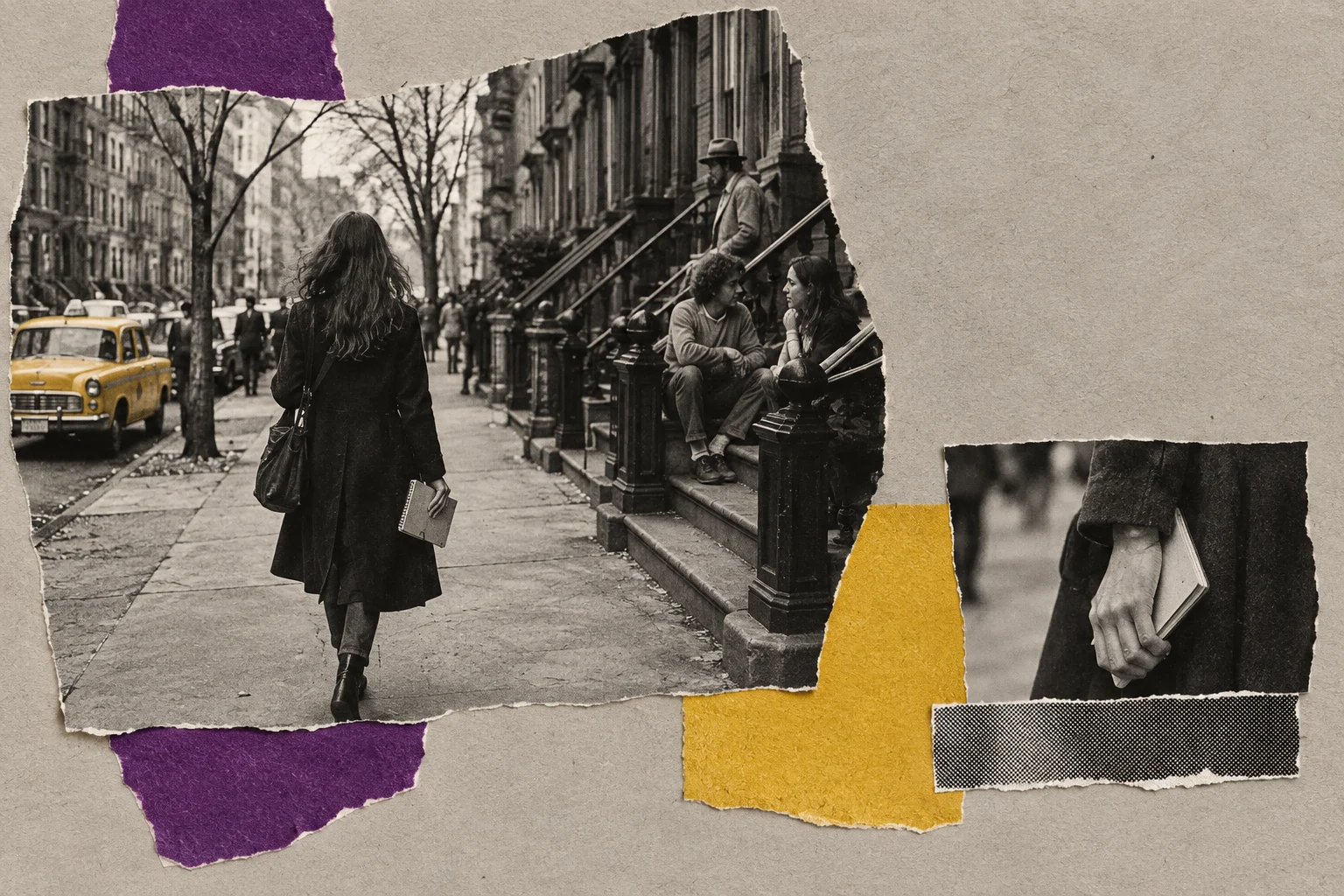
Jacobs argued for the intelligence of lived-in streets and mixed neighborhoods. Her New York work challenges plans that treat residents as obstacles.
Why they matterThe sidewalk contains knowledge a master plan can miss.
Related place / contextGreenwich Village
Read the biography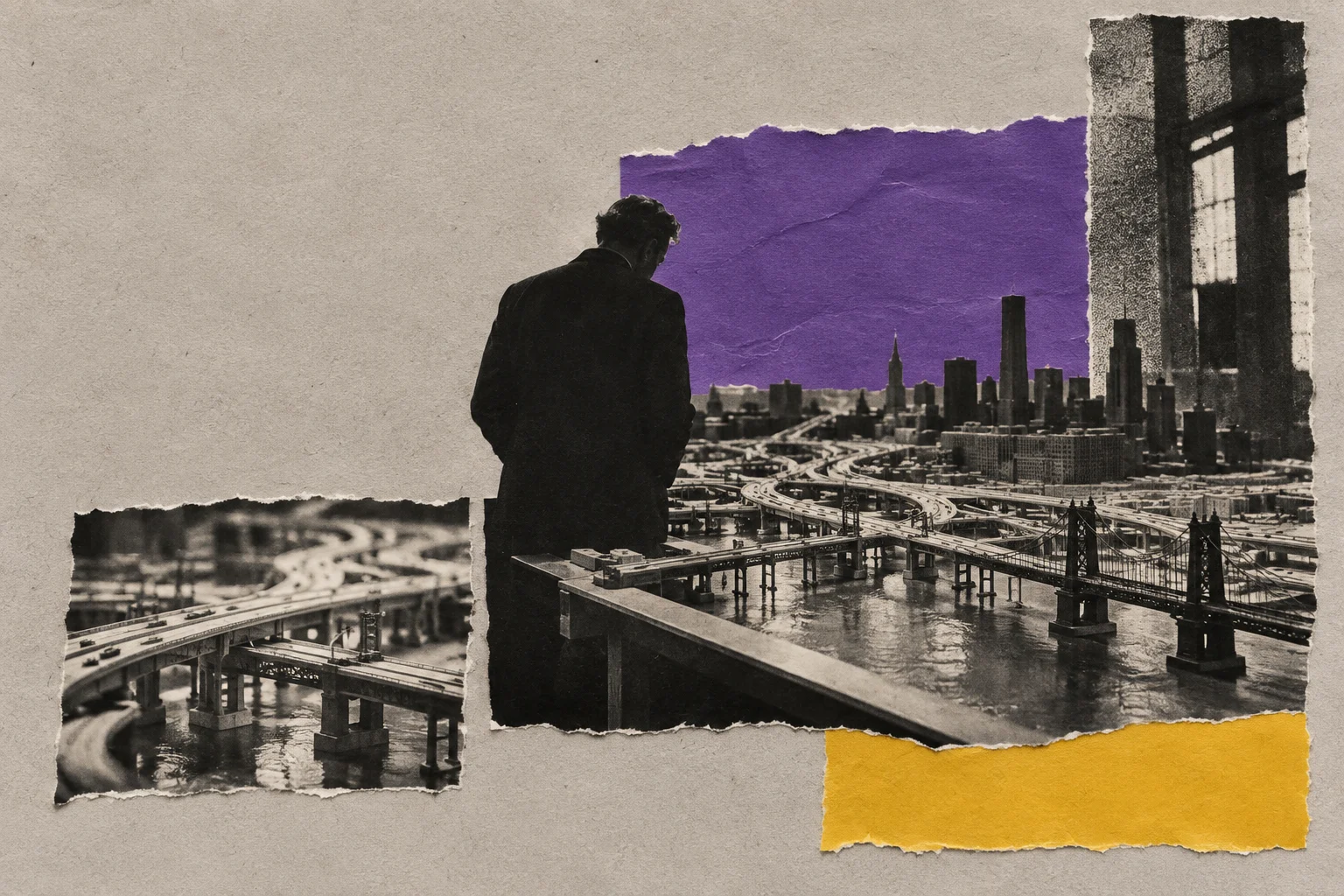
Planning / contested legacy · Historical foundations
Robert Moses
Moses reshaped New York through enormous infrastructure projects. Displacement, racial inequality, and public power belong beside the record of construction.
Why they matterA project’s scale is not the same as its public benefit.
Related place / contextCitywide parks, highways, and public works
Read the biography
Politics / education · Historical foundations
Shirley Chisholm
Chisholm joined education and organizing with a groundbreaking congressional career. Her Brooklyn base connects national political history with neighborhood representation.
Why they matterThe people excluded from power can change its expectations.
Related place / contextBedford-Stuyvesant / Brooklyn
Read the biography
Civil rights / LGBTQ history · Historical foundations
Bayard Rustin
Rustin helped organize major civil-rights campaigns while facing exclusion as a gay man. His New York life makes organizational labor part of the history.
Why they matterMovements need the people who make collective action possible.
Related place / contextHarlem / Chelsea
Read the biography
LGBTQ / community · Historical foundations
Marsha P. Johnson
Johnson helped sustain queer street life and mutual support in New York. Her work with Rivera connects liberation with the practical needs of homeless youth.
Why they matterCare and protest belong in the same history.
Related place / contextGreenwich Village
Read the biography
LGBTQ / community · Historical foundations
Sylvia Rivera
Rivera organized for people pushed aside within both society and liberation movements. Her work insists that housing and safety are part of queer freedom.
Why they matterA movement must account for the people it leaves outside.
Related place / contextGreenwich Village / STAR history
Read the biographyPoetry / activism · Historical foundations
Audre Lorde
Lorde joined poetry with sharp arguments about race, sexuality, and power. Her New York life connects literary expression with community and political work.
Why they matterDifference can be a source of knowledge rather than a problem.
Related place / contextHarlem / Staten Island
Read the biographyLiterature · Historical foundations
James Baldwin
Baldwin wrote race, desire, faith, and belonging with extraordinary moral pressure. Harlem remained a crucial reference in a life lived across countries.
Why they matterDistance can make a local history more visible.
Related place / contextHarlem
Read the biographyPoetry · Historical foundations
Langston Hughes
Hughes made Black urban life central to modern poetry. His work connects Harlem’s musical and conversational rhythms with literary form.
Why they matterA neighborhood’s language can change literature.
Related place / contextHarlem
Read the biographyWriting / anthropology · Historical foundations
Zora Neale Hurston
Hurston joined fiction with the study of Black cultural life. Her New York years connect the Harlem Renaissance with scholarship and independent literary voice.
Why they matterCultural knowledge belongs to the people who live it.
Related place / contextHarlem / Barnard College
Read the biographyLiterature / publishing · Historical foundations
Toni Morrison
Morrison transformed fiction while helping publish other Black writers. Her New York editorial work makes literary infrastructure part of the story.
Why they matterThe writer’s influence can include the books she helped others make.
Related place / contextNew York publishing world
Read the biographyPoetry / journalism · Historical foundations
Walt Whitman
Whitman drew on New York’s crowds, ferries, and public life. His writing turned the city’s many voices into an ambitious poetic project.
Why they matterThe metropolis can become a democratic literary form.
Related place / contextBrooklyn / Manhattan
Read the biographyMusic / literature · Contemporary influence
Patti Smith
Smith brought poetry into New York’s rock scene. Her work connects books, performance, and the city’s spaces of artistic friendship.
Why they matterCreative scenes grow between disciplines and people.
Related place / contextChelsea / Lower Manhattan
Read the biographyMusic · Historical foundations
Lou Reed
Reed made New York’s unofficial lives central to songwriting. His work belongs to an urban history broader than the polite version of downtown cool.
Why they matterThe city’s difficult lives deserve to be heard.
Related place / contextLower East Side / Downtown
Read the biographyArt · Historical foundations
Jean-Michel Basquiat
Basquiat connected language, history, and street experience in painting. His New York story makes rapid acclaim inseparable from the pressures surrounding it.
Why they matterAn artist’s image should not replace attention to the work.
Related place / contextLower Manhattan / Downtown art
Read the biographyArt / LGBTQ activism · Historical foundations
Keith Haring
Haring used a direct visual language in public space and activism. His queer life and AIDS-era work belong inside that artistic history.
Why they matterA drawing can become a public form of solidarity.
Related place / contextEast Village / subway history
Read the biographyArt / film · Historical foundations
Andy Warhol
Warhol joined art, celebrity, commerce, and film in a New York practice. His Factory also became a charged social environment for outsiders and performers.
Why they matterA studio can become an entire cultural network.
Related place / contextFactory / Midtown and Downtown
Read the biographyArt / storytelling · Historical foundations
Faith Ringgold
Ringgold used painting and story quilts to make histories visible. Her Harlem roots connect family, race, and public struggle with artistic form.
Why they matterA story can be carried by cloth as well as a book.
Related place / contextHarlem
Read the biographyArt · Historical foundations
Romare Bearden
Bearden’s collages build worlds from memory, migration, and Black life. His New York work gives the city’s art history a layered, musical texture.
Why they matterThe fragment can hold a whole social history.
Related place / contextHarlem / Downtown
Read the biographyArt / history · Historical foundations
Jacob Lawrence
Lawrence turned Black history into powerful sequences of paintings. His Harlem years connect artistic training with a community’s collective memory.
Why they matterHistory can become a visual narrative without becoming simple.
Related place / contextHarlem
Read the biographyPhotography / journalism · Historical foundations
Gordon Parks
Parks used photography and film to examine American inequality. His New York work connects portraiture with the responsibilities of public storytelling.
Why they matterThe camera carries ethical as well as visual choices.
Related place / contextHarlem / New York editorial work
Read the biographyPhotography · Historical foundations
Diane Arbus
Arbus photographed people whose lives unsettled conventional ideas of normality. Her New York work invites continuing debate about looking, power, and intimacy.
Why they matterA compelling image still deserves a critical viewer.
Related place / contextManhattan
Read the biographyPhotography / activism · Contemporary influence
Nan Goldin
Goldin’s photographs preserve intimate queer and artistic communities. Her later activism connects an established artistic platform with institutional accountability.
Why they matterAn artist can use visibility to challenge cultural power.
Related place / contextLower East Side
Read the biographyDance · Historical foundations
Alvin Ailey
Ailey built a dance institution rooted in Black experience and artistic range. His New York work makes choreography and access part of one cultural project.
Why they matterA company can change who sees themselves on stage.
Related place / contextAlvin Ailey American Dance Theater / Midtown
Read the biographyDance · Historical foundations
Martha Graham
Graham helped transform modern dance through movement and theatrical invention. Her New York company and school made that work an enduring institution.
Why they matterA new language needs places where it can be taught.
Related place / contextMartha Graham dance institutions / Manhattan
Read the biographyDance · Historical foundations
George Balanchine
Balanchine shaped a major American ballet institution in New York. His choreography connects musical structure with a distinctive visual and physical language.
Why they matterAn institution’s style is built through repeated artistic choices.
Related place / contextNew York City Ballet / Lincoln Center
Read the biographyDance / theater · Historical foundations
Jerome Robbins
Robbins moved between ballet and musical theater. His New York work shows how choreography can speak across supposedly separate audiences.
Why they matterThe borders between stages are more porous than they look.
Related place / contextBroadway / New York City Ballet
Read the biographyTheater / songwriting · Contemporary influence
Lin-Manuel Miranda
Miranda made neighborhood experience part of major musical-theater storytelling. His work connects Washington Heights with the scale and arguments of Broadway.
Why they matterA neighborhood can be a protagonist, not just a setting.
Related place / contextWashington Heights / Broadway
Read the biographyTheater · Historical foundations
Lorraine Hansberry
Hansberry brought Chicago housing history into New York theater. Her queer and political life makes the Broadway achievement one part of a larger intellectual story.
Why they matterA play can carry another city into a new public conversation.
Related place / contextGreenwich Village / Broadway
Read the biographyTheater / music · Historical foundations
Stephen Sondheim
Sondheim transformed what a musical could say and how it could say it. His work makes contradiction and complexity part of popular theatrical form.
Why they matterEntertainment can be intellectually demanding without apologizing.
Related place / contextBroadway / Manhattan
Read the biographyTheater / public access · Historical foundations
Joseph Papp
Papp built institutions that expanded public access to theater. His New York work connects production with the question of who gets an audience.
Why they matterTheater’s public value includes who can attend.
Related place / contextPublic Theater / East Village
Read the biographyTheater / institution-building · Historical foundations
Ellen Stewart
Stewart created a home for experimental theater and international exchange. La MaMa’s history makes hospitality and artistic risk part of institution-building.
Why they matterA small room can become a global cultural force.
Related place / contextLa MaMa / East Village
Read the biographyJazz · Historical foundations
Duke Ellington
Ellington made New York a major setting for an expansive musical career. His compositions connect jazz with a scale far beyond the nightclub set.
Why they matterThe bandstand can be a compositional laboratory.
Related place / contextHarlem / Cotton Club history
Read the biographyJazz · Historical foundations
Thelonious Monk
Monk developed an unmistakable musical language in New York. His work rewards close attention to rhythm, space, and the unexpected turn.
Why they matterOriginality often asks the listener to adjust.
Related place / contextSan Juan Hill / Harlem
Read the biographyJazz / performance · Historical foundations
Billie Holiday
Holiday’s singing made phrasing and emotional precision into major artistic tools. Her New York career belongs with the racism and constraints surrounding it.
Why they matterA beautiful voice lived inside a difficult social world.
Related place / contextHarlem / New York clubs
Read the biographyMusic / diaspora · Historical foundations
Celia Cruz
Cruz became central to the New York salsa world after leaving Cuba. Her influence connects performance with a diaspora that crossed borough and state lines.
Why they matterThe city’s music is made through migration.
Related place / contextNew York Latin music / regional Cuban community
Read the biographyHip-hop · Contemporary influence
DJ Kool Herc
Kool Herc’s DJ parties helped establish hip-hop’s early musical practice. The Bronx setting matters because the innovation grew within a local social world.
Why they matterA neighborhood gathering can create a new cultural form.
Related place / context1520 Sedgwick Avenue / Bronx
Read the biographyHip-hop / DJ technique · Contemporary influence
Grandmaster Flash
Flash advanced turntable techniques within New York’s early hip-hop scene. His work connects technical invention with the shared energy of the party.
Why they matterThe equipment becomes expressive through human ingenuity.
Related place / contextSouth Bronx
Read the biographyMusic · Historical foundations
Tito Puente
Puente’s percussion and bandleading helped define New York Latin music. His work connects neighborhood identity with a much larger Caribbean musical exchange.
Why they matterThe city’s rhythms do not stop at national borders.
Related place / contextSpanish Harlem
Read the biographyArchitecture · Historical foundations
I. M. Pei
Pei’s New York practice helped shape major modern buildings locally and internationally. His city connection includes professional networks as well as individual commissions.
Why they matterAn architectural capital is also a place of practice.
Related place / contextNew York architectural practice / Roosevelt Island
Read the biographyArchitecture / memory · Contemporary influence
Daniel Libeskind
Libeskind’s New York work connects design with public memory and rebuilding. The process shows how architecture operates within political and civic negotiation.
Why they matterA plan for a site is also a debate about meaning.
Related place / contextLower Manhattan / World Trade Center planning
Read the biographyArchitecture / public space · Contemporary influence
Elizabeth Diller
Diller’s collaborative practice joins architecture with performance and public space. New York projects make the relationship between culture and movement tangible.
Why they matterThe route through a place can be a designed experience.
Related place / contextHigh Line / Lincoln Center
Read the biographyArchitecture / contested biography · Historical foundations
Stanford White
White helped shape prominent New York architecture through McKim, Mead & White. His buildings and troubling biography should be studied without turning notoriety into admiration.
Why they matterArchitectural significance does not settle a person’s moral record.
Related place / contextWashington Square / Manhattan
Read the biographyEngineering · Historical foundations
Emily Warren Roebling
Roebling’s role in the bridge’s completion exceeded the expectations placed on women around her. The structure offers a way into histories of expertise and recognition.
Why they matterA famous achievement may have overlooked its essential collaborators.
Related place / contextBrooklyn Bridge
Read the biographyScholarship / civil rights · Historical foundations
W. E. B. Du Bois
Du Bois joined scholarship, writing, and organizing in a long civil-rights career. His New York work connects research institutions with political change.
Why they matterIdeas can become organized public action.
Related place / contextNAACP / New York intellectual life
Read the biographyArchives / history · Historical foundations
Arturo Alfonso Schomburg
Schomburg collected evidence of Black achievement against claims of historical absence. His work became a foundation for a major Harlem research institution.
Why they matterThe archive can challenge who gets counted in history.
Related place / contextSchomburg Center / Harlem
Read the biographyCommunity / religion · Historical foundations
Dorothy Day
Day connected religious conviction with journalism and practical solidarity. Her New York work made hospitality and political disagreement part of daily community life.
Why they matterCare can be a sustained public practice.
Related place / contextCatholic Worker / Lower Manhattan
Read the biographyOrganizing / political thought · Historical foundations
Emma Goldman
Goldman joined radical speech, writing, and organizing in New York. Her life connects immigrant city culture with arguments about labor and personal freedom.
Why they matterThe city’s history includes ideas that made authorities uncomfortable.
Related place / contextLower East Side
Read the biographyFood / cultural history · Historical foundations
Edna Lewis
Lewis brought Southern cooking and deep culinary knowledge into New York restaurant life. Her work helped make regional food a serious cultural subject.
Why they matterCuisine carries histories that a fashionable dining room can overlook.
Related place / contextCafé Nicholson / Manhattan
Read the biographyFood / neighborhood institution · Historical foundations
Sylvia Woods
Woods built a restaurant that became an enduring Harlem gathering place. Its importance sits in food, hospitality, and the community around the tables.
Why they matterA restaurant can become a neighborhood’s shared room.
Related place / contextSylvia’s / Harlem
Read the biography